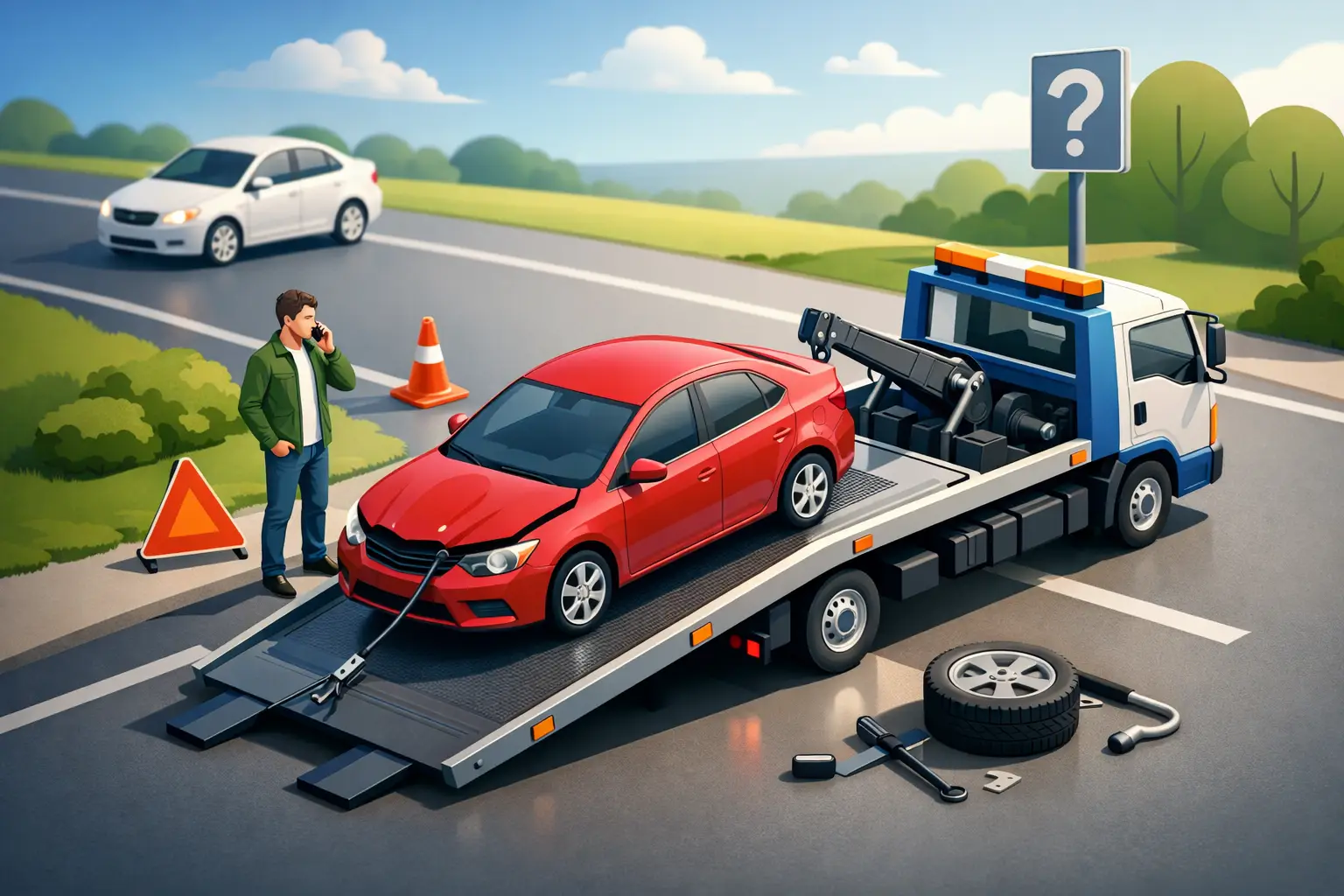
A car problem rarely happens at a convenient time. It happens before work, on a rainy night, with kids in the back seat, or halfway through a trip across Snohomish County. If you’re asking when should you call a tow, the short answer is this: call when driving the vehicle could put you, your passengers, or other drivers at risk.
Some problems can be handled with roadside help. Others mean the safest move is to stop trying to make the car go one more mile. Knowing the difference can save you from a worse breakdown, a more expensive repair, or an accident.
When should you call a tow instead of driving?
The biggest mistake drivers make is trying to limp a vehicle home. Sometimes that works. Sometimes it turns a manageable repair into major damage.
If your car won’t start, that does not always mean you need a tow. A dead battery, an empty gas tank, or a simple lockout may call for roadside assistance instead. But if the vehicle starts and is making loud noises, leaking fluid, overheating, struggling to steer, or showing signs of brake trouble, towing is usually the safer choice.
A good rule is simple: if you do not trust the vehicle to drive normally, do not force it. Modern cars can hide serious problems behind one warning light or one strange sound. By the time the issue feels obvious, the risk may already be high.
Situations where a tow is the right call
Some roadside situations are clear-cut. Others depend on what the vehicle is doing and where you are parked.
After an accident
Even a minor collision can damage more than the bumper. A vehicle may have frame damage, a bent wheel, leaking fluids, or hidden suspension problems that make it unsafe to drive. If the airbag deployed, the wheel is not straight, the tire is pushed inward, or fluid is leaking, call for a tow.
This matters even more on busy roads around Marysville and throughout Snohomish County, where traffic can move fast and shoulders are not always forgiving. After a crash, safety comes first. Moving a damaged vehicle farther than necessary can make things worse.
When the engine overheats
If steam is coming from under the hood or the temperature gauge is climbing into the red, stop driving. Pull over safely, turn the engine off, and let it cool. Driving an overheating engine can lead to severe damage, including a blown head gasket or a failed engine.
Some drivers hope the car will cool down and be fine after a few minutes. Sometimes it will. But if it overheats again quickly, or you see coolant leaking, it is time for a tow.
When you have brake or steering problems
This is one of the easiest calls to make. If the brakes feel soft, the pedal goes to the floor, the car pulls hard when braking, or the steering becomes difficult or unpredictable, do not keep driving.
Those are not inconveniences. They are direct safety issues. A tow is the safer option, even if the repair shop is only a few miles away.
When a tire change is not enough
A flat tire does not always mean towing. If you have a usable spare and the vehicle is in a safe place, a tire change may solve the problem. But there are exceptions.
Call for a tow if you have multiple flat tires, wheel damage, a blowout that affected the rim, no spare, missing lug nuts, or a flat in a dangerous location where changing the tire is not safe. The same goes for low-clearance vehicles, heavy work vehicles, or roadside conditions that put you too close to moving traffic.
When the car is leaking fluid
Not every leak means immediate danger, but some do. If you notice fuel, transmission fluid, coolant, or a large oil leak, take it seriously. A fuel leak is a fire risk. A coolant leak can lead to overheating. A transmission fluid leak can leave you stranded without warning.
Small drips in a driveway are one thing. A fresh puddle under the vehicle during a roadside stop is another. If the leak is active and you are unsure what fluid it is, towing is the safer bet.
When warning lights come with drivability problems
A dashboard warning light by itself does not always mean you need a tow truck. But if the check engine light is flashing, the oil pressure light comes on, the battery light appears with dimming power, or the car starts shaking, stalling, or losing speed, stop driving.
The key is context. A warning light plus poor performance usually means the issue is no longer minor.
Problems that may only need roadside assistance
Not every call needs full towing service. In many cases, faster help comes from roadside assistance.
A dead battery can often be solved with a jump start. Running out of gas may only require fuel delivery. Locking your keys in the car usually calls for a lockout service, not a tow. A single flat tire in a safe location may be handled with a tire change.
That said, roadside service is only the right choice if the vehicle will be safe to drive after the immediate problem is handled. If a jump start gets the car going but the electrical system still seems unstable, you may still need towing. If a spare tire is installed but the suspension is damaged, you should not continue driving.
When should you call a tow for a motorcycle?
Motorcycles need a little extra caution. A bike that has been dropped, hit debris, or suffered a flat can be harder to assess on the roadside than a passenger car. If anything feels off with the tires, forks, brakes, chain, or controls, towing is often the better choice.
The same goes after any crash, even a low-speed one. A motorcycle may look rideable but still have damage that affects handling. Proper transport matters too. Motorcycles need secure handling, not improvised towing.
Location matters as much as the problem
The same mechanical issue can feel very different depending on where you are. A slow leak in a parking lot is one situation. A slow leak on the shoulder of I-5 at night is another.
If your vehicle is stuck in traffic, partly blocking a lane, stranded on a narrow shoulder, or stopped in poor visibility, call for help sooner rather than later. You do not need to wait for the problem to get worse before making the safe decision.
This is especially true during bad weather. Rain, fog, and low light make roadside problems more dangerous for everyone nearby. In those moments, speed and professional handling matter.
What to do before the tow truck arrives
If you need a tow, your first job is staying safe. Pull as far off the road as possible. Turn on your hazard lights. If you can exit the vehicle safely and stand away from traffic, do that. If not, stay buckled inside if the vehicle is in a dangerous traffic position and moving around would put you at greater risk.
Try to note your location clearly. Nearby exits, mile markers, cross streets, business names, and landmarks all help. If you call a local company, that local road knowledge can make a real difference in getting help to you quickly.
If possible, let the dispatcher know what kind of vehicle you have and what the problem seems to be. That helps send the right equipment, whether you need light-duty towing, a flatbed, a motorcycle tow, or roadside service instead.
Why waiting too long can cost more
A lot of drivers hesitate to call because they hope the vehicle will make it a little farther. That instinct is understandable. Nobody wants an extra expense or disruption.
But driving on a bad transmission, overheating engine, damaged suspension, or failing brake system often leads to a bigger repair bill than the tow would have. It can also leave you in a worse location later, with fewer safe options.
Calling early is not overreacting. In many cases, it is the cheaper and safer move.
For local drivers, that peace of mind matters. A family-owned company like Richard’s Towing Inc understands that most people calling are not having a good day. They need clear answers, fast help, and respectful service, not added stress.
The best time to call a tow is the moment you realize continuing to drive could make the situation less safe. Trust what the vehicle is telling you, trust your instincts, and give yourself permission to stop before a bad situation gets worse.