
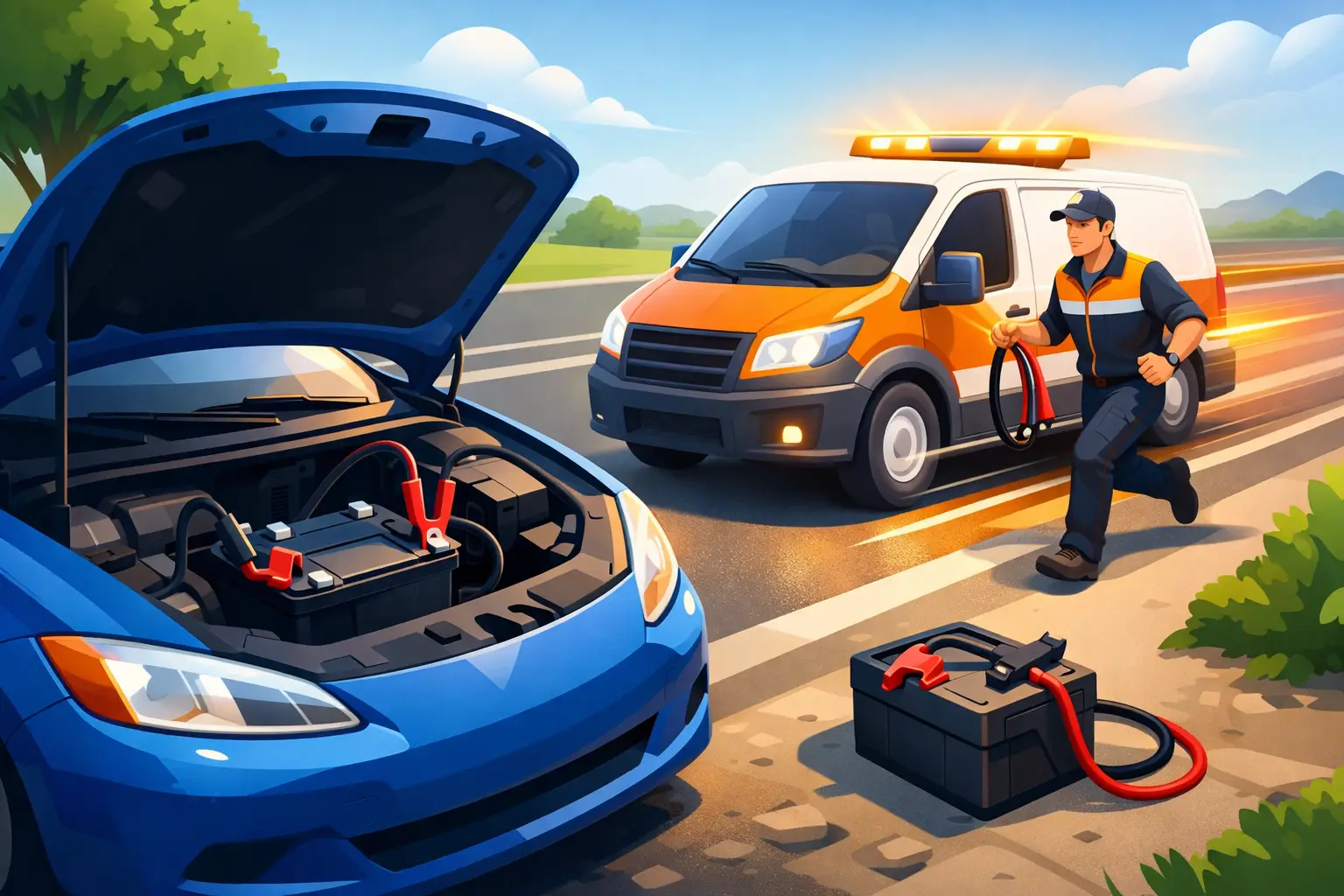
Your car was fine yesterday, and now it will not even click. That is usually how dead battery roadside support starts – not as a planned repair, but as a rushed morning, a late-night parking lot problem, or a stop that lasts longer than expected. When your vehicle will not start, what matters most is getting help quickly, getting the problem checked safely, and knowing whether a jump start will actually solve it.
A dead battery can feel simple, but it is not always just a battery issue. Sometimes the lights were left on. Sometimes cold weather, age, or short trips drained the charge. In other cases, the battery is only part of the problem and the real issue is the alternator, corroded terminals, or an electrical fault. That is why roadside help needs to be more than just connecting cables and hoping for the best.
What dead battery roadside support should include
Good dead battery roadside support is fast, but speed alone is not enough. The service should also be careful, clear, and focused on getting you back on the road without creating a second problem.
A proper roadside response starts with safe positioning. If your car is on the shoulder, in a dark lot, or stuck in a tight space, the first priority is making the scene safer for you and for passing traffic. After that, the battery and connections should be checked before any jump start is attempted. Loose cables, heavy corrosion, damaged terminals, or visible battery swelling can change the safest next step.
If a jump start makes sense, it should be done with the right equipment and the right sequence. Modern vehicles are more sensitive than many drivers realize. Incorrect connections can damage electronics, and some vehicles may not respond well to a quick amateur attempt. Professional roadside technicians are there to reduce that risk, not add to it.
Just as important, the service should tell you what happens next. If the engine starts, you still need to know whether the battery is likely to hold, whether the vehicle should stay running, and whether you should drive it or tow it. Honest guidance matters when you are already stressed.
Why batteries die when you least expect it
Most batteries do not fail all at once. They weaken over time, then one extra strain pushes them past the point where the vehicle can start. In Snohomish County, that strain might be cold morning temperatures, repeated short drives, long periods of sitting, or simply an older battery reaching the end of its life.
Short trips are a common reason drivers get caught off guard. If you mostly drive a few miles at a time, the alternator may not fully recharge the battery after each start. Over weeks and months, that pattern can leave the battery weaker than it seems. Then one chilly day or one interior light left on overnight is enough to leave you stranded.
Battery age also matters. Many drivers get three to five years from a battery, but that range is not a guarantee. Driving habits, weather exposure, and vehicle electrical demands all affect lifespan. If the battery is older and your car has been slow to crank, roadside support may get you moving once, but replacement may still be the real fix.
Parasitic drain is another possibility. That means something in the car continues drawing power after the engine is off. It could be a glove box light, aftermarket electronics, or a deeper wiring issue. In that case, a jump start may help for the moment, but the battery will likely die again until the source is diagnosed.
When a jump start is enough and when it is not
This is where experience matters. Not every no-start situation should be handled the same way.
If the battery was drained by a known cause, like lights left on, and the battery is otherwise healthy, a jump start may be all you need. Once the vehicle starts, it may recharge enough during driving to get you home or to a repair shop.
If the battery is old, badly corroded, leaking, swollen, or repeatedly failing, a jump start is often only temporary. The car might start and then leave you stranded again at the next stop. That is frustrating in daylight and much worse late at night or in bad weather.
There is also the possibility that the battery is not the main problem. If the car still will not start after a proper jump, or it starts and then immediately dies, the issue may be with the alternator, starter, or another electrical component. In that situation, towing is usually the safer and more practical option than continuing to troubleshoot on the roadside.
What to do while waiting for dead battery roadside support
The best thing you can do first is stay safe. If possible, pull fully out of traffic and turn on your hazard lights. If you are on a busy road and it is unsafe to remain inside the vehicle, move to a safer area away from traffic. If staying inside is safer, keep your seat belt on and wait there.
Try not to keep testing the ignition over and over. Repeated attempts can drain the battery further and may make the situation harder to assess. If you know the battery is dead, preserve whatever power is left by turning off lights, climate controls, and accessories.
It also helps to have a few details ready when you call for help. Your location, vehicle type, whether the engine clicks or stays silent, and whether you are in a garage, driveway, parking lot, or roadside shoulder can all affect the response. Clear information helps the right truck and equipment get dispatched faster.
If you are unsure whether the issue is the battery, mention what you noticed before the car stopped starting. Dim lights, warning lights on the dash, a recent need for multiple jump starts, or electrical glitches can point toward a bigger problem.
Why local roadside help makes a difference
When your car will not start, you are not looking for a long explanation. You need somebody who knows the area, can reach you quickly, and can work efficiently once they arrive.
That is where local experience really shows. A roadside company that regularly serves Marysville and the surrounding Snohomish County area understands traffic patterns, common breakdown routes, apartment access issues, shopping center lots, and the backroads where GPS directions are not always perfect. That local knowledge can save time when minutes matter.
It also changes the customer experience. A dependable local team understands that people calling for help are often on their way to work, trying to get home to family, stuck with children in the car, or dealing with a stressful situation alone after dark. The right response is not just technical. It is calm, respectful, and focused on making a bad moment more manageable.
For many drivers, bilingual support matters too. In an urgent roadside situation, being able to explain what is happening clearly and understand what comes next can make the process feel much less overwhelming.
Choosing the right help for a dead battery problem
Not every roadside company offers the same level of service. If your vehicle is disabled, you want to know the company answering the phone can actually handle what happens if the jump start does not work.
That is why it helps to call a provider that offers both roadside assistance and towing. If the battery comes back to life, great. If it does not, you are already working with a team that can safely tow the vehicle without making you start over with a second call. That is especially useful when the problem turns out to be more than a battery.
You should also look for basic trust signals that matter in emergency service: licensed and insured operation, real local experience, and availability around the clock. Family-owned companies often bring a more personal level of care, but what matters most is consistency – showing up when promised, treating customers with respect, and handling vehicles carefully.
Richard’s Towing Inc is built around that kind of response: practical help, fast dispatch, and straightforward service for drivers who need answers right away.
After the car starts, what should you do next?
If your vehicle starts after roadside service, do not assume the problem is solved for good. It depends on why the battery died in the first place.
If the battery was drained by accident and the car now starts normally, you may be able to keep driving without another issue. Even then, it is smart to have the battery tested soon, especially if it is older. If the car has needed more than one jump in a short period, the battery or charging system should be checked before you trust it on your next early morning start.
Pay attention to warning signs after the jump. If dashboard lights stay on, headlights seem weak, electronics act strangely, or the car struggles again after being shut off, the vehicle may need repair or replacement parts rather than another roadside jump.
A dead battery is never convenient, but the right help can keep it from turning into a bigger problem. When roadside service is quick, safe, and honest about what your vehicle needs, you are not just getting a jump start. You are getting a calmer way through a stressful moment.